Never Miss a Chance to Do the Most Good
Please enter your name, email and zip code below to sign up!
Never Miss a Chance to Do the Most Good
Please enter your name, email and zip code below to sign up!


About 15% of the homeless population in the U.S. is comprised of 'chronically homeless' individuals.
This population is especially vulnerable during the hottest and coldest months of the year.
As long as there's The Salvation Army, there's no such thing as 'no place to go.'
Our group homes, emergency shelters and transitional living centers provide housing, food and overnight lodging for varying amounts of time to destitute families, the homeless, the displaced and to youth where family care is undesirable or unavailable. In addition, we supplement every shelter service with emotional and spiritual support.
The Salvation Army provides safe shelter to nearly 30,000 people every night through a variety of programs.

Emergency Shelters
For families and individuals looking to escape extreme weather or just wanting a safe, quiet place to spend the night, emergency shelters provide a nutritious meal, a warm bed and a clean shower to those in need.
Group Homes and Transitional Living Centers
Along with meeting immediate physical needs such as food and shelter, these establishments provide educational, counseling and vocational services to help individuals develop vital life skills and independence for re-entry into society.
Family Service Programs
The Salvation Army assists families in need by providing food, housing and utility assistance. Best of all, these programs enable parents to stay with their children, even when placed in emergency shelters.
A Safe Place to Sleep. A Pathway to Stability.
Every night across Oregon and Southwest Idaho, The Salvation Army Cascade Division provides emergency shelter and housing programs for individuals and families facing homelessness, domestic violence, and housing instability.
Through a network of shelters and supportive housing programs, we provide safety, stability, and the resources people need to rebuild their lives.
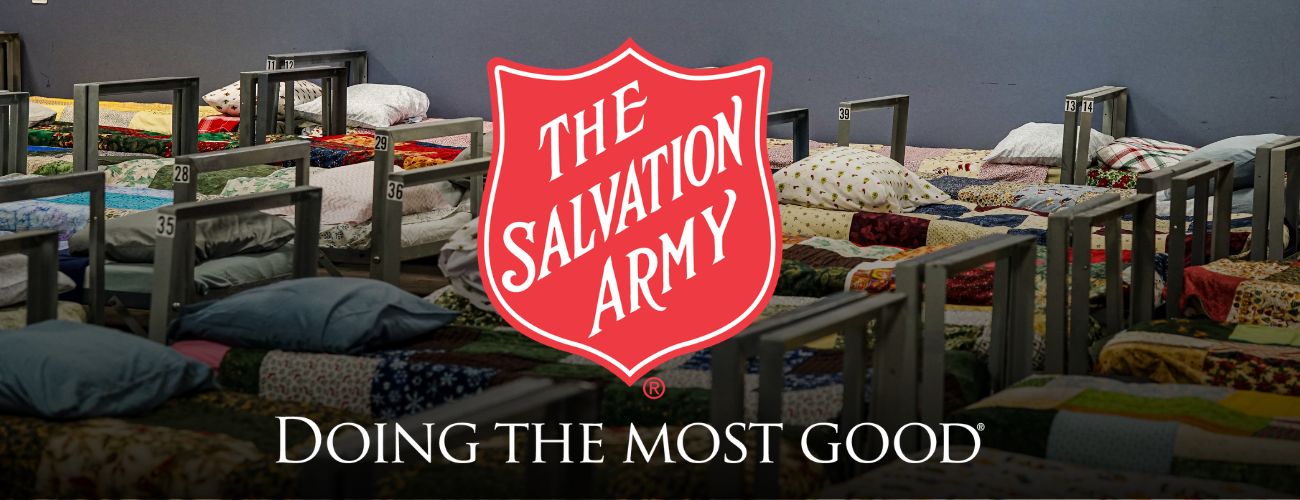
Every bed represents more than shelter.
It represents hope.
SHELTER PROGRAMS
Each program serves individuals facing different challenges while working toward the same goal of restoring stability and independence.
West Women’s and Children’s Shelter
Emergency Housing for Survivors of Domestic Violence
A safe emergency shelter for women and children fleeing domestic violence. Residents receive housing, meals, case management, and support services designed to help families rebuild their lives.
Program Highlights
- 60 bed emergency shelter
- Three meals served daily
- Legal and safety planning support
- Children’s programming and advocacy services
- Average stay between 45 and 90 days
Location confidential for resident safety.
LEARN MORE -
https://westwomens.salvationarmy.org/
Veterans and Family Center
Transitional Housing for Veterans
The Veterans and Family Center provides transitional housing and supportive services for veterans and their families experiencing homelessness.
Program Highlights
- 75 housing units for veterans and families
- Case management and housing stabilization
- Recovery and relapse prevention services
- Financial literacy and employment support
- Average stay between 3 and 9 months
Address
14825 SW Farmington Rd
Beaverton, Oregon
Phone
503.239.1259
LEARN MORE -
https://veterans.salvationarmy.org/
Portland Red Shield Shelter
Emergency Overnight Shelter
Address
5325 N Williams Ave
Portland, Oregon
Hours
8 PM to 6 AM
The Portland Red Shield Shelter provides emergency overnight shelter and connects individuals with additional housing and support services.
Burnside Shelter
Emergency Overnight Shelter for Women
Address
30 SW 2nd Ave
Portland, Oregon
Hours
8 PM to 8 AM
The Burnside Shelter offers overnight shelter and connections to housing services for women experiencing homelessness.
Northrup Shelter
Emergency Overnight Shelter
Address
1435 NW Northrup St
Portland, Oregon
Hours
8 PM to 6 AM
The Northrup Shelter provides safe overnight accommodations and connections to additional housing support services.
HOW TO ACCESS SHELTER SERVICES
Individuals seeking shelter through The Salvation Army may access services through several pathways.
Walk In Access
Some emergency shelters allow individuals to arrive during intake hours and receive services based on availability.
Intake Screening
Programs such as the West Women’s and Children’s Shelter and Veterans and Family Center require intake assessments.
Community Referral Systems
Many individuals are referred through coordinated housing systems operated by local community organizations.
If you or someone you know needs shelter services, contact your local Salvation Army service center.
The Salvation Army now operates three overnight shelters in Portland.
When Joe first moved to Portland, Oregon, things didn’t work out as he had planned. He spent his first nights there on the streets, unable to sleep, he said. Then someone told him about The Salvation Army’s Northrup Shelter.
Located in Northwest Portland’s Pearl District, Northrup Shelter—a low-barrier, overnight shelter—opened in September 2025. Joe was one of its first guests. He quickly became a regular there.
“It was the first time in some time that I felt safe getting a good night’s sleep,” he said.
With a current capacity of 200 beds, the Northrup Shelter joined the two overnight shelters The Salvation Army opened in January 2025: the Burnside Shelter, formerly called SAFES, (100 beds) and the Moore Street Shelter (100 beds), creating a network of overnight shelter locations across the city.
The Salvation Army operates these shelters in partnership with the City of Portland, responding not only to the immediate danger of sleeping outdoors, but to the more complex journey toward permanent housing.
Cascade Divisional Commander Major Jonathan Harvey said The Salvation Army in the Portland area has a plan that details the expansion of services to people experiencing homelessness—one that ultimately leads to self-sufficiency.
“Making the shelter inviting and providing compassion has made me feel human again. Thanks in big part to this shelter and staff, I now have a job and hope.”
Joe, shelter guest
“The first step is overnight shelter, which our partnership with the City of Portland has enabled us to accomplish,” Harvey said. “The future of service in the Portland Metro region is on track to impact more lives than ever before.”
At these three shelters last year, The Salvation Army provided overnight shelter to 3,363 individuals.
“Staff have worked so hard and put in countless hours to stand up three shelters over the past year,” Harvey said. “The Salvation Army has been bringing hope to the City of Portland for 140 years, and a legacy for the future is being established by the care and attention each individual is given on a day-to-day basis.”
The shelters were a key part of Portland Mayor Keith Wilson’s initiative to add 1,500 beds for Portland’s unsheltered population by Dec. 1, 2025, a goal the city surpassed.
In a Dec. 1 video recorded at the Northrup Shelter, Wilson announced the city had reached its goal, while noting overnight shelters are only a first step toward permanent housing.
“Now, we must turn our focus to housing development with the same tenacity, urgency and coordination that we brought to delivering shelter,” Wilson said in a press release. “Shelter saves lives today, but housing provides stability and dignity for a lifetime.”
The low-barrier, overnight-only shelters move people from dangerous street conditions into temporary safety. While it’s impossible to know how many lives have been saved, a JAMA study cited by the City of Portland found people living on the streets are 300 percent more likely to die than those in overnight shelter.
It’s not just about coming in from the cold, then; it’s about being safe. The city released a report in July 2025 revealing “significant decreases” in crime around The Salvation Army’s Burnside and Moore Street shelters.
“We have learned that when you’re living on the streets, you’re stuck in survival mode,” said Justin Moshkowski, Executive Director Multnomah County Shelter Services. “You are always on edge, always looking over your shoulder, just trying to make it through the day. You can’t think about moving forward when you’re just trying to stay safe.”
The Salvation Army Northrup Shelter opened in September 2025. Courtesy Salvation Army Portland Metro.
Moshkowski said change is possible, though, with the efforts of a dedicated staff. At The Salvation Army’s shelters, there is a culture of care.
“When staff treat guests with basic respect by learning their name, looking them in the eye, treating them like they matter, something shifts,” Moshkowski said. “When they feel safe here, when they’re treated with dignity, they don’t need the protective armor as much. That’s when real change becomes possible.”
Joe, who has now found permanent housing, called the Northrup Shelter staff “wonderful.”
“Making the shelter inviting and providing compassion has made me feel human again,” he said. “Thanks in big part to this shelter and staff, I now have a job and hope.”
As The Salvation Army continues to serve Portland’s unhoused community, it aims to maintain The Salvation Army’s overall mission to meet human needs in Jesus’ name without discrimination, serving the vulnerable and upholding human dignity.
“We count it a privilege to serve our unhoused neighbors, not only by meeting their practical needs but by demonstrating the love of Jesus,” said Major Maggie Laubach, Divisional Secretary for Portland Metro Social Services. “Through this work, we hope to remind every individual that they are seen, further affirming their dignity and value as a person created in the image of God.”
Do Good:
Join us in giving joy to families who are experiencing poverty, hunger, job loss and more. Your generosity offers joyful reassurance that even during our most challenging times, we are not alone.